
Window Cleaning Facts — Greenlight Services
Interesting Window Facts from Around the World

24,348 Windows
The Burj Khalifa
● Dubai, UAE
The Burj Khalifa has 24,348 windows. A team of 36 cleaners takes about three months to clean them all — and by the time they finish, it’s nearly time to start again.
$3M Custom Rig
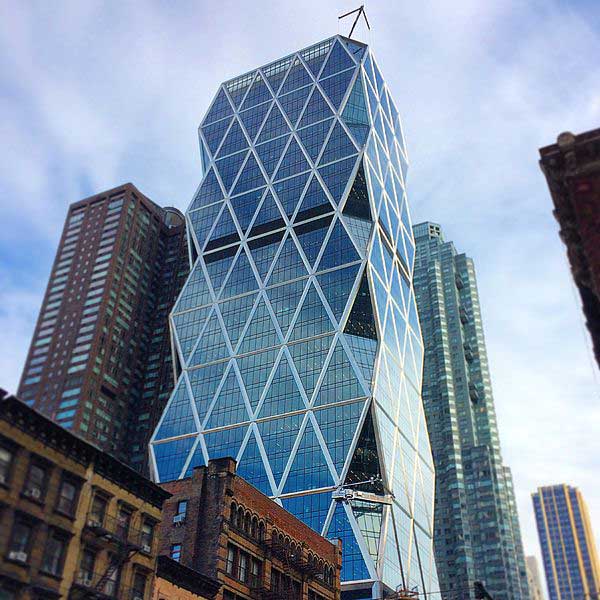
Hearst Tower
● New York City, USA
Hearst Tower’s complex exterior takes a full month to clean. Its unique geometry required a custom-built rig that cost $3 million and took 3 years to design.
Taxed by Window Size
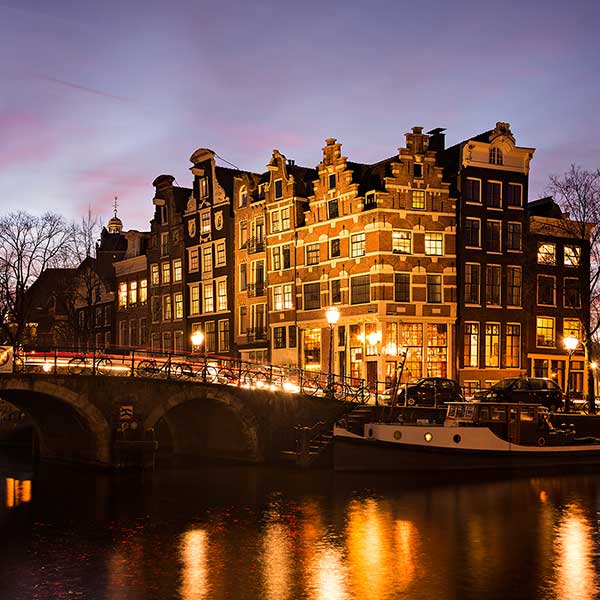
Amsterdam
● Amsterdam, Netherlands
Amsterdam once taxed homes by the number and size of their windows — a clever way to impose income taxes on wealthier families without touching their private financial records.
6,500 Windows / 102 Floors
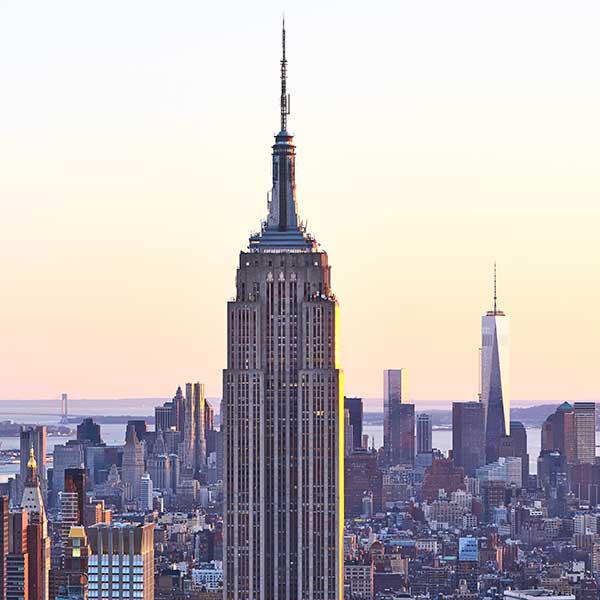
The Empire State Building
● New York City, USA
The Empire State Building has 6,500 windows across 102 stories. The cleaning cycle is so long that by the time the last window is done, it’s time to start back at the top.
147 Windows
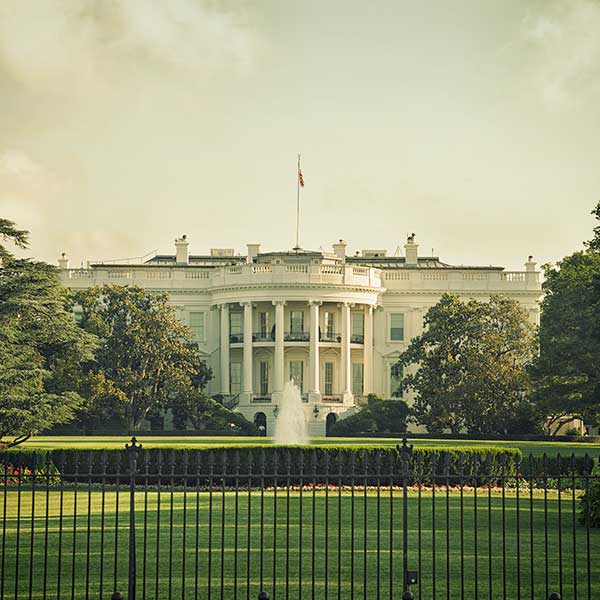
The White House
● Washington D.C., USA
The White House has 147 windows. Each one must meet rigorous security and cleanliness protocols before any cleaning crew can access them.
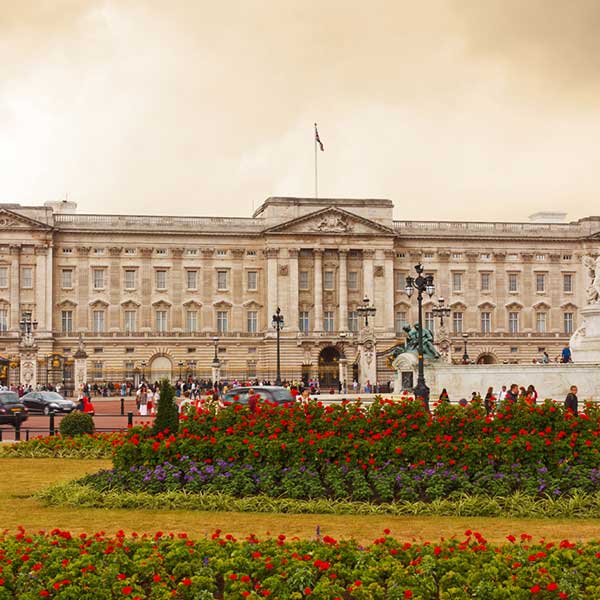
760 Windows
Buckingham Palace
● London, England
Buckingham Palace has 760 windows across 775 rooms. Keeping the royal residence’s iconic façade gleaming demands meticulous, regular professional cleaning.
The Standards Behind a Professional Clean
The buildings above make good trivia, but the story that actually matters to a Houston property owner is less about record-breaking skyscrapers and more about what actually governs how professional window cleaning gets done safely, correctly, and at the standard a commercial property deserves. Here’s what’s behind the squeegee.
Safety Standards: ANSI/IWCA I-14.1 and OSHA
Window cleaning above ground level is regulated work, not a hobby with a ladder. The primary industry-specific safety document is ANSI/IWCA I-14.1, the Window Cleaning Safety Standard jointly published by the American National Standards Institute and the International Window Cleaning Association (IWCA). It’s split into two parts: Part A covers safety guidelines for the access equipment crews actually use, including rope descent systems, suspended scaffolds, ladders, and man-lifts, while Part B is aimed at the manufacturers and installers of that equipment. The IWCA has held this role for more than 35 years and is formally recognized by OSHA as an Alliance Ambassador for the window cleaning trade, meaning the two organizations jointly developed a field safety guide covering the industry’s most common hazards.
On the federal side, OSHA’s general industry fall protection rules live in 29 CFR 1910 Subpart D, Walking-Working Surfaces, with 29 CFR 1910.28 as the core standard covering the duty to provide fall protection. In general industry settings, fall protection requirements apply starting at 4 feet of elevation, lower than the 6-foot threshold used in construction. Where a personal fall arrest system is used, OSHA requires a full-body harness, a lanyard or self-retracting lifeline, and an anchor point rated to hold at least 5,000 pounds per attached worker, rigged so a fall can’t free-fall more than 6 feet before the system engages.
None of this is abstract compliance trivia. It’s the difference between a crew that shows up with a ladder and a bucket and one that’s actually equipped, trained, and insured to work at height on a commercial building. When you’re vetting a window cleaning company for a multi-story property, asking whether they’re insured is really shorthand for asking whether they operate to this standard.
Two Cleaning Methods, Different Jobs
Professional crews generally reach for one of two methods, and the right choice depends on the building, not personal preference. Traditional cleaning uses a cleaning solution and a squeegee: direct, fast, and still the best tool for interior glass, storefronts at ground level, and glass with heavy hard-water staining that needs real mechanical scrubbing to lift. Water-fed pole systems work differently. A telescoping pole carries purified water up to a soft brush head that agitates and rinses the glass at the same time, with modern poles reaching windows as high as roughly 24 meters, about 80 feet, directly from the ground. Because the water has had its minerals stripped out, it dries without spotting or streaking, no squeegee pass required. That combination of reach and a streak-free finish is why water-fed systems have become the standard choice for large commercial exteriors, shopping centers, and multi-story office buildings, where working from the ground instead of a ladder or lift is also a meaningful safety upgrade. In practice, most experienced commercial crews, Greenlight included, use both methods on the same property: water-fed poles for the exterior high-reach work, traditional squeegee-and-solution for interior glass and anything with buildup that needs direct contact to remove.
Why Cleaning Cadence Matters
Cleaning frequency isn’t just cosmetic, either. Hard water contains dissolved calcium and magnesium, and when it dries on glass it leaves mineral deposits that can react with the glass surface over time. Industry reporting on glass maintenance describes this as a progression: light surface spotting first, then a semi-opaque haze that resists normal washing, and eventually permanent etching that can require specialized restoration rather than a simple cleaning. Commercial exteriors are especially exposed, since runoff, irrigation overspray, and mineral leaching from concrete and stone facades all land on the same glass. A defined, regular cleaning schedule is the practical way to keep buildup from ever reaching that point. Window maintenance writeups also commonly note a second, less obvious cost of neglected glass: reduced natural light. Grime-coated windows let in less usable daylight, which pushes offices and retail spaces to lean harder on artificial lighting, and buildup around seals and edges can contribute to drafts that make HVAC systems work harder than they should. None of that shows up on an invoice, but it shows up on an energy bill.
How Often Should You Schedule Cleaning?
How often a building actually needs professional attention depends more on how the building is used than on how tall it is. Ground-floor retail and storefronts, where windows are effectively part of the sales floor, generally hold up best on a weekly to monthly cleaning cadence, since fingerprints, smudges, and street-level grime accumulate fast and are the first thing a customer sees walking in. Standard office and mixed-use buildings typically run on a quarterly schedule, and high-rise exteriors are often cleaned once or twice a year given the equipment and access involved, with ground-floor entrances and lobby glass kept on a tighter monthly rotation regardless of what the upper floors get. Buildings in higher-pollution or coastal areas usually need to run toward the more frequent end of whatever range fits their type, since airborne grime and salt air both accelerate buildup. The right schedule is really a property-specific answer, not a fixed number, which is why a legitimate quote should start with a walkthrough rather than a flat price per window.
What a Legitimate Quote Should Include
If you’re comparing bids for commercial window cleaning, price is the easiest number to compare and the least useful one on its own. A legitimate commercial window cleaning company’s quote, and the insurance behind it, should include general liability coverage, which protects you if a worker is injured on your property or if equipment damages your building, landscaping, or a parked vehicle during the job; workers’ compensation insurance, a legal requirement in Texas and most states for any business with employees, covering medical costs and lost wages if a worker is hurt on the job, since without it an on-site injury can become the property owner’s liability; and a certificate of insurance, which any legitimate company should be able to produce on request before a crew ever sets foot on your property, and which can list your business as an additional insured for the duration of the work. Some commercial clients also require a fidelity or janitorial bond before granting building access, which reimburses the client in the event of employee theft. A company that can’t produce a certificate of insurance on request, or that hedges when asked about workers’ compensation, isn’t operating at the standard a commercial property needs, regardless of how competitive the quote looks on paper.
Greenlight Services has operated in the Houston, Fort Bend, and Montgomery County market since 1994, carrying the insurance and safety practices described above on every commercial job, whether that’s a single storefront in River Oaks or a multi-story office building downtown. If you’re comparing quotes for a property in the Houston area, use the checklist above rather than the price alone.
Sources: Burj Khalifa window count and cleaning cycle, reported by The National and Gulf News; Empire State Building window count, Empire State Building official facts and figures; Hearst Tower’s custom cleaning rig, Robinson-Solutions; Buckingham Palace’s window count and cleaning schedule, Bridgewater Glass; Amsterdam’s historical window tax, Wikipedia; the ANSI/IWCA I-14.1 safety standard and the OSHA–IWCA Alliance, iwca.org and osha.gov; OSHA fall protection requirements under 29 CFR 1910.28, Flexible Lifeline Systems; water-fed pole versus traditional squeegee cleaning methods, Fish Window Cleaning; hard water etching and glass damage stages, GlassRenu; dirty windows and commercial energy efficiency, Weber Cleaning; commercial window cleaning insurance and bonding, Insureon; and recommended commercial cleaning frequency by property type, Detroit Sponge.